
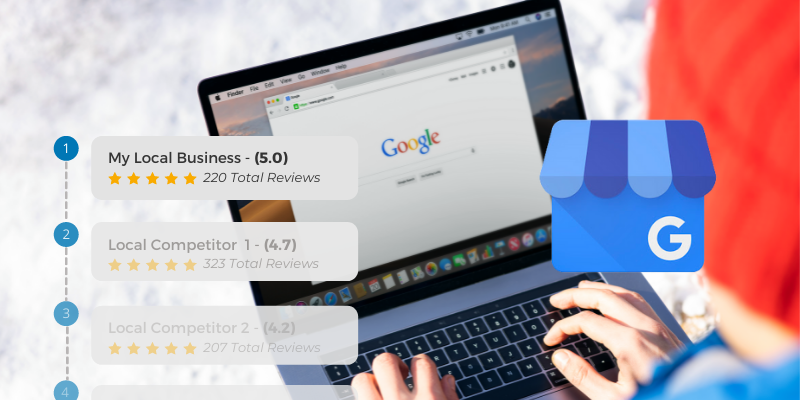
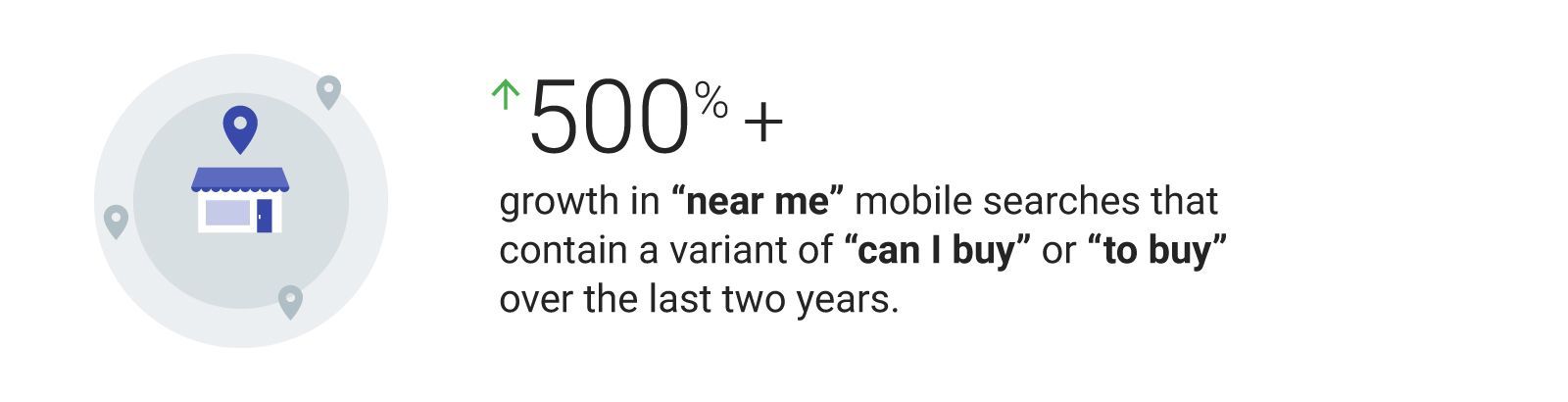

Most business owners treat Google Maps like a lottery ticket. They set up their profile, cross their fingers, and hope the phone rings. When it doesn't, they hire a "marketing agency" for $1,500 a month to write useless blog posts that nobody reads. Let’s stop the madness right now. Google’s local algorithm is not a mystery. It is a machine. And like any machine, if you input the right data, you get the right output. The businesses dominating the "Map Pack" in your city aren't lucky—they are just feeding Google exactly what it wants to see. Google looks at three core pillars to decide if you rank #1 or #50: Relevance: Do you actually do what the searcher is asking for? Prominence: Do people trust you? (Reviews, authority, citations). Proximity: How close are you to the searcher? (You can't fake this, so you must domi nate the other two). I’ve audited hundreds of local businesses. I see the exact same 10 mistakes every single time. Business owners are missing the basic foundational signals that tell Google, "I am the best option in this city." I got tired of repeating myself, so I built a checklist. This is the exact Step-by-Step Checklist I use when I tear down and rebuild a client’s local presence. No fluff, no "vanity metrics." Just the exact levers you need to pull to get your business into the Top 3.

Open Google Maps right now and search for your main service in your city. Look at the Top 3 results. Does one of them have a name that looks like a sentence? Something like: "Best Emergency Plumber Denver - 24/7 Cheap Drain Cleaning" ? I have news for you: That is not their legal business name. And they are stealing money out of your pocket every single day they sit there. The "Keyword Stuffing" Cheat Google’s algorithm heavily favors keywords in the business name. It’s the strongest signal there is. Unethical competitors know this, so they stuff their business name with keywords to trick the system. While you are playing by the rules with your actual name ("Smith & Sons Plumbing"), they are ranking #1 with a fake name. It’s time to take them out. The Weapon: Google’s Business Redressal Form Most business owners don’t know this exists, but Google has a "Snitch Line." It’s called the Business Redressal Complaint Form . It is designed specifically for you to report fraudulent activity on Maps. Here is the Hit List of what you can report: Fake Names: If their sign says "Joe’s Pizza" but their Google listing says "Joe’s Best Pizza Delivery New York," that is a violation. Fake Addresses: Zoom in on their location. Is it a residential house? A P.O. Box? If they are listed as a "shop" but they are working out of their garage without hiding their address, that’s a violation. Lead Gen Listings: Fake profiles set up just to sell leads to real businesses. How to Pull the Trigger Gather Evidence: Take a photo of their storefront (or lack thereof). Screenshot their Secretary of State business registration showing their real legal name. File the Report: Search "Google Business Redressal Form." Fill it out. Attach your proof. Wait: It usually takes Google 1-2 weeks to review. When it works, it’s beautiful. I’ve seen "Map Pack" leaders vanish overnight. And guess who moves up to take their spot? You. Fight back.

Most business owners beg for reviews like this: "Hey, thanks for your business! Can you please leave us a 5-star review?" That sounds nice. It’s polite. It might even get you a 5-star rating. But it is functionally useless for SEO. Here is the dirty secret of Google Maps: 5 stars are just the ticket to the dance. They don't help you win. If you have fifty 5-star reviews that say "Great job!" or "Highly recommend!", Google has no idea what you actually did. You are just a "Great" generic business. But if your competitor has twenty 5-star reviews that say "Fixed my leaky water heater in Denver quickly," guess who ranks #1 when someone searches "Water heater repair Denver"? He wins. You lose. The "Keyword" Review Hack Google reads every single word your customers write. It looks for Keywords (services you offer) and Location Signals (cities/neighborhoods you serve). These are called "Review Justifications." If you search for a service on Maps right now, look at the results. You will often see a little bold snippet under a business name that says: "Their website mentions drain cleaning " OR "Review mentions emergency plumbing " That is Google telling you exactly why they ranked that business. The Script That Changes Everything You need to stop asking for a "review" and start guiding the witness. You need to politely plant the keywords you want to rank for into their brain before they type. Here is the exact script I give my private clients. (Modify this for your specific industry).

Picture this scenario: It’s 5:30 PM on a Tuesday. A potential customer in your city just had a pipe burst, or maybe they just realized they need a last-minute gift. They pull out their phone and search for your exact service. You have the most 5-star reviews in town. You have been in business for 20 years. You should be the first result they see. But you are nowhere to be found. Instead, the #1 spot goes to a competitor with a 3.8-star rating who started six months ago. Why? Because you told Google you close at 5:00 PM. The "Openness" Update Changed Everything Google made a massive shift recently that most business owners completely missed. It’s called the "Openness Signal." Here is the logic: When a user searches on Google Maps, they usually want a solution right now. Google’s algorithm decided that showing a "Closed" business—even a highly rated one—is a bad user experience. If I search for "Plumber" at 6 PM, I don't want a list of plumbers who will open at 8 AM tomorrow. I want someone who picks up the phone now. The Hard Truth: If your Google Business Profile says you are "Closed," Google effectively de-ranks you during those hours. You are invisible to the evening crowd.

Most business owners treat Local SEO like voodoo. They sprinkle some keywords on their website, post a random photo to Facebook, and pray to the Google Gods that their phone rings. Stop guessing. Google isn't a mystery; it’s a machine. It wants to feed its users the most Relevant , Prominent , and Trustworthy result nearby. If you aren't showing up in the "Map Pack" (the top 3 results), it's because you aren't giving the machine what it wants. I’ve audited hundreds of local businesses, and I see the same thing every time: you are spending 80% of your time on stuff that doesn’t matter (like posting on Instagram) and 0% on the signals that actually move the needle. Here are the 7 Google Maps Ranking Factors that actually decide who wins and who stays invisible. 1. Your Primary Business Category (The "Big Lever") This is the single most important setting on your profile, yet 50% of businesses get it wrong. Google looks at your "Primary Category" to decide what you are. If you are a "Pizza Restaurant" but you list yourself as "Italian Restaurant," you might rank for pasta but vanish when someone searches "Pizza near me." The Fix: Look at the guy ranking #1 in your town. What category is he using? Copy it. 2. Keywords in the Business Title (The "Danger Zone") I’m going to be honest with you: having "Denver Plumbing Pros" as your business name ranks better than "Smith & Sons." Google puts a massive weight on keywords in the business title. The Warning: Do NOT stuff keywords if that isn't your legal name. If your sign says "Smith & Sons" but your Google name is "Smith & Sons Best Plumber Denver," you will get suspended. The Strategy: If you are rebranding or filing a DBA, get your main keyword into your legal name. It’s the strongest signal there is. 3. Review "Context" (Not Just Star Ratings) Everyone knows you need 5 stars. But did you know Google reads the text of your reviews to understand what you do? If a customer writes: "Buddy helped me with Local SEO and my Google Maps Ranking ," Google sees those bolded words as trusted tags. The Fix: Stop asking for "a review." Ask for specifics. "Hey, would you mind mentioning the drain cleaning we did for you in your review?" 4. Behavioral Signals (The "Click" Vote) Google watches what people do after they see you. Do they click your listing? Do they click "Call"? Do they ask for Directions? If 100 people see you and nobody clicks, Google thinks you are irrelevant and drops you. The Fix: Your main photo must be amazing. Your reviews must look recent. You need to look like the obvious choice so people actually click. 5. Website "Service Pages" (The Anchor) Your Google Business Profile is not an island. It is anchored to your website. If you want to rank for "Water Heater Repair," you better have a specific page on your website dedicated to "Water Heater Repair." If you just list all your services in one big bulleted list on your homepage, Google doesn't respect your authority. Build a dedicated page for every service you want to rank for. 6. Local Backlinks (Relevance > Power) In "National SEO," you want links from the New York Times. In "Local SEO," a link from your local Chamber of Commerce or a Little League sponsorship page is worth its weight in gold. Google wants to see that you are part of the local fabric. The Fix: Sponsor a local 5k. Join the Chamber. Get listed in the local business directory. Show Google you are actually in the ci ty. 7. Proximity (The Uncontrollable F actor) Here is the hard truth: You rank highest where you are located. If your office is in North Denver, you will struggle to rank in South Denver. Proximity is the #1 factor, and you can't fake it (unless you open a new office). The Fix: Stop obsessing over ranking 20 miles away. Dominate your immediate 5-mile radius first. Own your backyard before you try to conquer the state.
Hey everyone, Buddy here! If you’ve been watching the digital world lately (and if you’re a client, you know we live and breathe it), you know things are moving faster than ever. The way people find businesses on Google has shifted dramatically over the last 14-15 months, and the rise of AI search is accelerating everything. That’s why we put together a crucial client update, outlining the 6 Pillars of our 2026 strategy. This is our proprietary blend—what we call the Google Accelerator Program —designed to secure your visibility, maximize your leads, and future-proof your business against constant change. Here’s a quick overview of what we’re focusing on to keep your business on top: Pillar 1: Protecting & Pushing Your Visibility In today's environment, security is paramount. That’s why we’ve implemented GBP Lock . This acts as a digital bodyguard for your Google Business Profile (GBP), instantly notifying us if any unauthorized or nefarious changes are attempted. It’s an essential layer of protection against anything that could tank your hard-earned ranking—from accidental errors to competitive sabotage. We’re also ensuring Google sees continuous activity by posting timely social updates (including geo-tagged SEO videos) to keep your profile fresh and relevant. Pillar 2: The Google Accelerator Program We treat your local ranking like a science. Our Accelerator Program uses a mix of powerful technologies—cloud links, AI data insights, and CTR optimization—to strategically boost your position. Our AI system analyzes your competitors and your own profile, providing "surgical" recommendations on keywords and optimizations to ensure every click drives maximum value. Pillar 3: AI Search Optimization (Get Ready for Gemini & ChatGPT) This is the future, and the results are undeniable. We’re finding that leads coming from AI search—where users ask a conversational question to tools like Gemini or ChatGPT—are converting at up to four times the rate of traditional searches. We are actively optimizing your content using specific technical structures (schema) and voice-ready Q&A to ensure your business is the expert choice recommended by AI assistants like Siri, Alexa, and Google's own tools. Pillar 4: Mastering Local SEO Beyond AI, the fundamentals still win. We deploy advanced techniques like: Competitive Benchmarking: Deep-diving into the strategies of your top three local rivals. Surgical Content: Developing content strategies that are highly specific and data-driven to outrank the competition. Automated Review Management: We handle the day-to-day work of replying to reviews within 24 hours (Monday-Friday) using keywords that further boost your local authority. Pillar 5: Building Your Reputation Google absolutely loves consistent, positive feedback. We’ve automated our review campaigns to provide a steady flow of new reviews every month. We also use a negative review filter to manage any concerns offline, ensuring your public rating remains high. Crucially, we leverage Rotating Offer Posts on your GBP. These offers show up three times as often as standard posts and convert at a significantly higher rate. We typically set up two compelling offers to run on alternating months to keep your ideal clients engaged. Pillar 6: Database Reactivation Why hunt for new clients when you have a goldmine waiting? We can launch targeted campaigns (via email or SMS) to reach out to former clients and old leads in your database. By offering a compelling reason to return—perfect for businesses with recurring services—we help you recapture lost revenue and boost your business ranking with minimal effort. Your Role: Keep the Content Fresh! While we handle the heavy lifting, the most important thing you can do is supply us with fresh content: real photos taken with your phone (Google prefers these over stock or AI images right now!) and your latest offer ideas . This partnership ensures we have the best ammunition to secure your success. We are committed to doing everything we can to help you get more leads, clients, and sales. Want to dive deeper into this 2025 strategy? You can watch the full client update video on our YouTube channel right now

1. The E-E-A-T Turbocharge: Why "Real Experience" Wins
The Myth: "You Won't See Results for 6 Months"

ou Woke Up This Morning, and Your Phone is Silent. Your Business is Missing from the 3-Pack. What Happened?

The New Review Reality: It's Not About Stars Anymore...