By Buddy Rathmell, Founder of Map Winners · 5 min read
Someone searching for a plumber, dentist, or business broker near them isn't planning to shop around for a week. They search, they scroll the map, and they call one of the first three names they see. That habit is exactly why seo for google maps matters so much right now, and why the businesses sitting outside those top spots watch calls go to someone else every single day. At Map Winners, we help local businesses fix that problem, and the next few sections break down exactly what pushes a listing to the top.
Table of Contents
What Actually Moves Your Google Maps Ranking
Google looks at three things when deciding who shows up in the Local 3-Pack: proximity, relevance, and prominence. You can't control proximity much, but the other two are fully in your hands. That's where most of the ranking work actually happens.
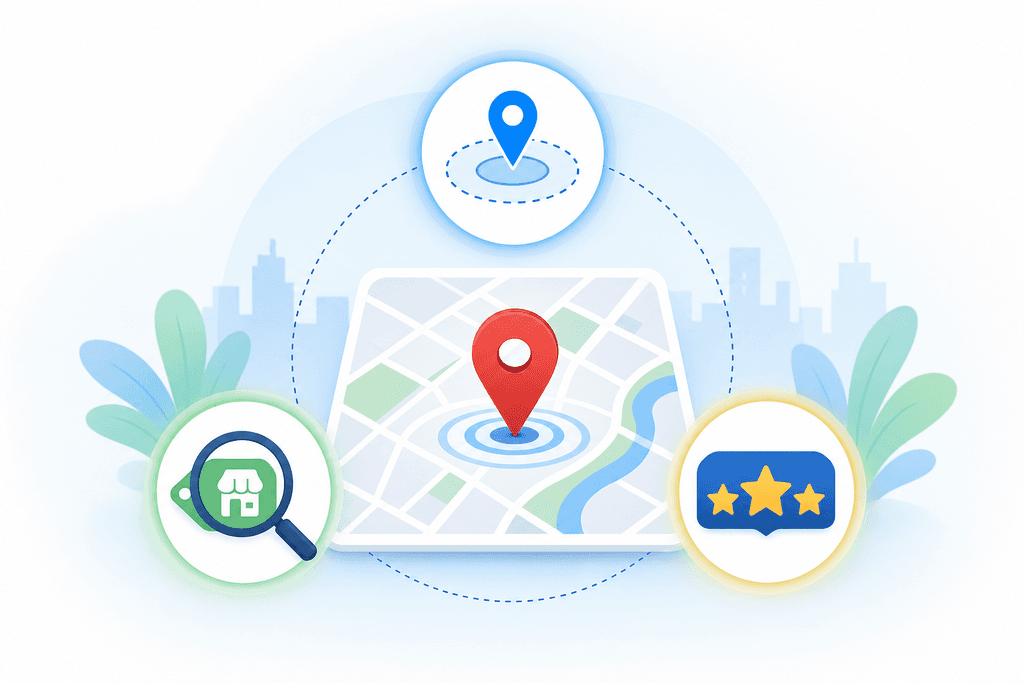
Your Google Business Profile is ground zero. Categories, photos, posts, and how you answer Q&A all send signals about what your business does and how active you are. A profile that's half-filled out just sits there while competitors with complete ones get picked up first.
- Pick the right primary and secondary categories so Google knows exactly what to match you to
- Post updates regularly instead of letting the profile go quiet for months
- Upload fresh photos that show real work, not stock images
- Answer every review, good or bad, within a couple days
Citations matter too. If your business name, address, and phone number don't match across directories, Google gets confused and trusts you less. And reviews and response rate directly affect both your ranking and whether people actually click your listing over the next one. Backlinko's local SEO guide breaks down these ranking signals in more depth if you want the full technical picture. We cover the category piece specifically in our post on choosing the right Google Business Profile categories.
Local SEO Moves Beyond the Map Pack
Ranking in the map pack is one goal, but there's a whole layer of local SEO happening on your actual website too. Location pages let multi-location brands and franchises rank in every city or neighborhood they serve, not just the one near headquarters.
Business brokers and real estate agents especially rely on hyperlocal content since buyers search by specific neighborhood or zip code, not just city name. A broker who only has one generic "about us" page is missing dozens of searches happening right in their backyard.
None of this works if the site is slow or hard for Google to crawl. Technical SEO is the plumbing behind everything else, and it also feeds into how AI tools like ChatGPT and Perplexity pull information when someone asks for a recommendation.
| Client Type | Profiles Managed | Result |
|---|
| Crypto ATM operator | 540 locations | Consistent visibility nationwide |
Managing 540 Google Business Profiles by hand isn't realistic for anyone. That kind of scale needs a system, which is exactly what our local SEO service is built around, along with our guide on building location pages that actually rank.
Turning Map Visibility Into Booked Jobs
Showing up on the map is only half the job. If nobody answers the phone or follows up fast, that ranking goes to waste.
Review and reputation management keeps your star rating high and makes sure complaints get handled before they turn into a public back-and-forth. Pair that with AI automations and CRM follow-up, and leads get contacted before your competitor even checks their voicemail. Semrush's local SEO best practices piece touches on why speed and reputation work together, and we go deeper on the timing piece in why speed to lead wins.
The numbers back this up. A dentist client went from 20th place to the top 3 and was fully booked in about 60 days. A solar company grew from $350K to $1.7M in annual sales after their map ranking improved.
- Dentist client: 20th → top 3 ranking, fully booked in 60 days
- Solar company: $350K → $1.7M in annual sales
That's the real payoff of ranking well, not just visibility but calls that turn into booked jobs, which is the whole point behind our review management service.
Wrap-Up Getting Found on Google Maps Fills the Pipeline
Ranking in the Local 3-Pack isn't about one trick. It takes a solid profile, clean citations, and real reviews all working together, which is why local SEO and profile optimization go hand in hand.
If you run more than one location, or you're a business broker managing listings across a few markets, you need a system built for scale, not guesswork. That's what our full range of services is built to handle, from one shop to hundreds.
Here's the short version:
- Profile, citations, and reviews all need to line up
- Bigger brands need dedicated systems, not one-off fixes
- We back it with a 200% ROI guarantee and keep working until you hit target rankings
Now, the question is what happens once you start showing up. That part's next.
Frequently Asked Questions About Google Maps SEO
How long does it take to rank in Google Maps
Most businesses start seeing movement within 60 to 90 days, though it depends on how competitive your area is. A dentist we worked with went from 20th place to the top 3 and got fully booked in about two months. Older profiles with more reviews and citations tend to move faster than brand new ones.
Do I still need paid ads if I'm ranking well
No, ranking well in the map pack is meant to replace your reliance on ads over time. A solar company we helped grew from $350K to $1.7M a year mostly through organic map visibility. Some businesses keep a small ad budget for extra coverage, but it's optional, not required.
How is multi-location SEO different
Each location needs its own optimized profile, local citations, and location page, plus consistent business info across every listing. This gets messy fast without a system, which is why we manage things like 540 Google Business Profiles for one client using structured processes instead of doing it by hand for each one.